
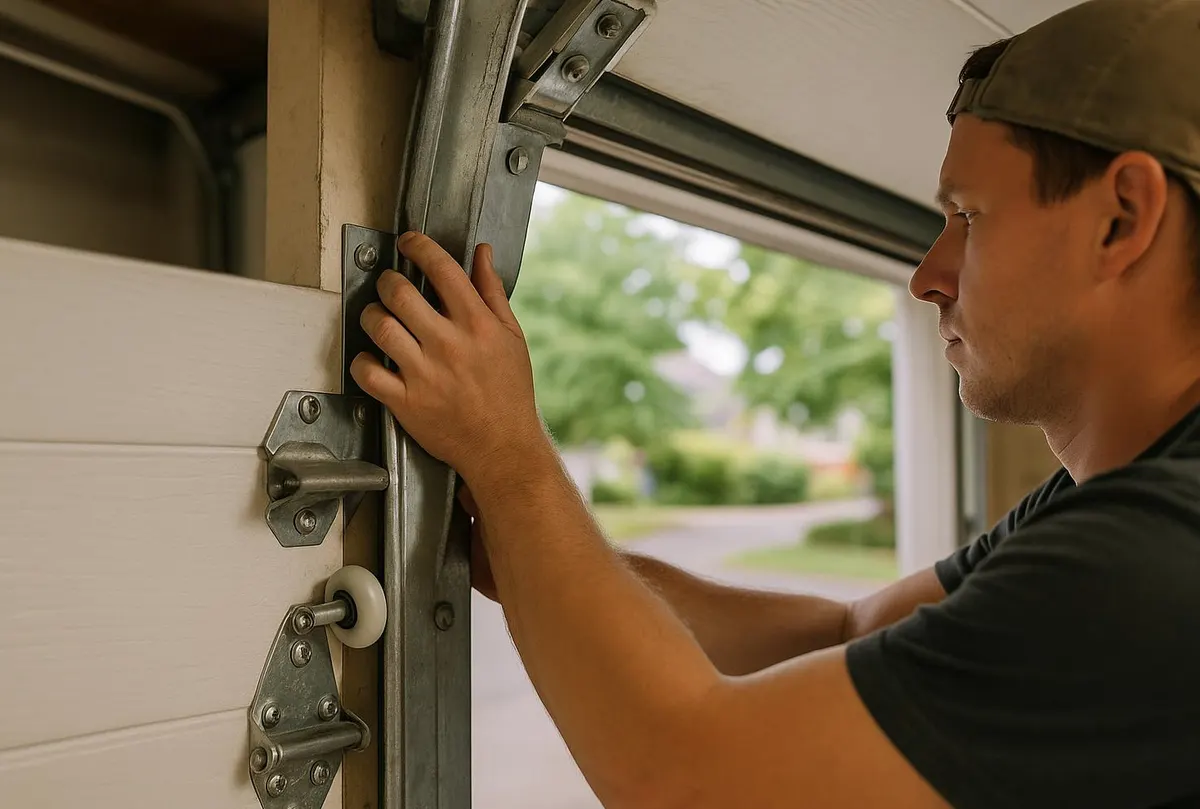
What a Technician Sees on a Typical Winter Call
Most calls this time of year start the same way: a homeowner hits the opener button and the door either doesn't move at all, shudders and stops partway, or opens with a loud crack like it was glued to the floor. By the time a technician arrives, the door is usually already open, but the evidence is still there, a thin ring of frost or dried moisture along the bottom seal, slower-than-normal travel on the track, or a motor that strains and clicks before catching. In Bear Valley Springs and Stallion Springs especially, where overnight temperatures drop hard and driveways sit shaded by pines well into the morning, this is one of the most common service calls between November and February.
The Symptoms Worth Noting Before You Call
- The door won't lift at all, and the opener motor hums or clicks without movement.
- A loud pop or crack happens right as the door breaks free, followed by normal operation.
- The door opens slower than usual, or stutters partway up before continuing.
- The bottom section looks or feels damp, with a visible line where the rubber seal met the concrete.
- The opener reverses or stops before the door fully closes, especially on the first attempt of the day.
Write down which of these match your door. It tells the technician where to start, and it often points to more than one issue happening at once, which is common once a door has been sticking for a few cold mornings in a row.
The Causes, Checked in Order
1. Ice or Frost Bonding the Weatherstripping to the Slab
This is the first thing checked because it's the most common and the easiest to confirm. Overnight moisture from dew, light rain, or melted frost can seep under the rubber seal at the bottom of the door. When temperatures drop below freezing, that moisture turns to ice and glues the seal to the concrete. The door isn't broken, it's literally stuck to the ground. A technician checks for a visible ice line, a stiff or crackling seal, or dampness on the slab just inside the door line. The fix is straightforward: gently break the bond with a flat tool or hair dryer rather than forcing the opener to pull through it, which can strain the springs or tear the seal. Long-term, improving drainage near the threshold and checking that the seal isn't cracked or flattened helps prevent repeat icing.
2. Thickened Lubricant and Stiff Rollers or Hinges
Next comes the hardware. Standard grease and old lubricant thicken in cold weather, and on tracks or hinges that haven't been serviced in a while, this shows up as slow, jerky movement rather than a smooth glide. A technician checks the rollers, hinges, and track for dried or gummy lubricant, rust starting to form from winter moisture, or rollers that don't spin freely by hand. The fix is a full clean and relube with a silicone or lithium-based lubricant rated for cold temperatures, applied to hinges, rollers, and the track, not the springs themselves. This is a maintenance item, and it's one of the most effective ways to prevent the stiffness that leads to bigger repairs later.
3. Spring Tension Affected by Temperature
Metal contracts slightly in cold weather, and torsion springs are no exception. A door that felt balanced in October can feel heavier or lift unevenly once temperatures drop, especially overnight. A technician checks this by disconnecting the opener and manually lifting the door partway to see if it holds its position or drops. If it feels noticeably heavier than normal, or if the opener is straining to compensate, the springs may need adjustment or, if they're already near the end of their lifespan, replacement. This isn't usually the first cause checked, since ice and lubrication are more common and easier to rule out first, but it's a real factor on doors that are already older or were marginally balanced to begin with.
4. Opener Settings and Track Alignment
If the door still hesitates after the first three checks, the technician looks at the opener's force and limit settings, along with the track alignment. Cold contraction can shift a track slightly out of true, especially on older installations, and an opener set too conservatively will read that extra resistance as an obstruction and reverse the door. The fix here is recalibrating the force settings and confirming the tracks are plumb and properly fastened. This is also when a technician checks the sensors, since cold, foggy mornings can sometimes affect sensor alignment or create condensation that interferes with the beam.
When to Call Tehachapi Garage Door Co
If your door is sticking to the slab every cold morning, straining the opener, or making a loud crack before it moves, it's worth having it looked at rather than forcing it repeatedly, which can damage the opener motor or stress the springs. Our Garage Door Maintenance service covers the lubrication, balance check, and track alignment that prevent most cold-weather sticking, and if the springs are already showing signs of fatigue, our Spring Replacement service gets the door back to a safe, properly balanced lift before winter settles in further. We serve Tehachapi, Bear Valley Springs, Stallion Springs, Golden Hills, Keene, Mojave, California City, and Rosamond, and we show up on time with the parts and tools to get it done in one visit.
If your garage door is giving you trouble this winter, give Tehachapi Garage Door Co a call. We're your local garage door service in Tehachapi, CA, and we're ready to help.