
That Frustrating Moment When Your Garage Door Won't Stay Closed
You press the button on your remote, watch your garage door start its descent, and then — just before it reaches the floor — it reverses and goes right back up. You try again. Same thing. Maybe you try holding the wall button down, and it still won't cooperate.
This is one of the most common garage door complaints we hear from homeowners in Tehachapi, and the good news is that it's usually caused by something fixable. The bad news is that ignoring it leaves your garage wide open to weather, pests, and security risks — none of which you want to deal with, especially during our windy seasons up here in the mountains.
Let's walk through the most likely reasons your garage door reverses before closing all the way and what you can do about each one.
Understanding Your Garage Door's Safety System
Before we dive into causes, it helps to understand why your garage door is designed to reverse in the first place. Since 1993, federal law has required all automatic garage door openers to include a reversing mechanism. This prevents the door from closing on a person, pet, or object. Your opener uses two main systems to detect obstructions:
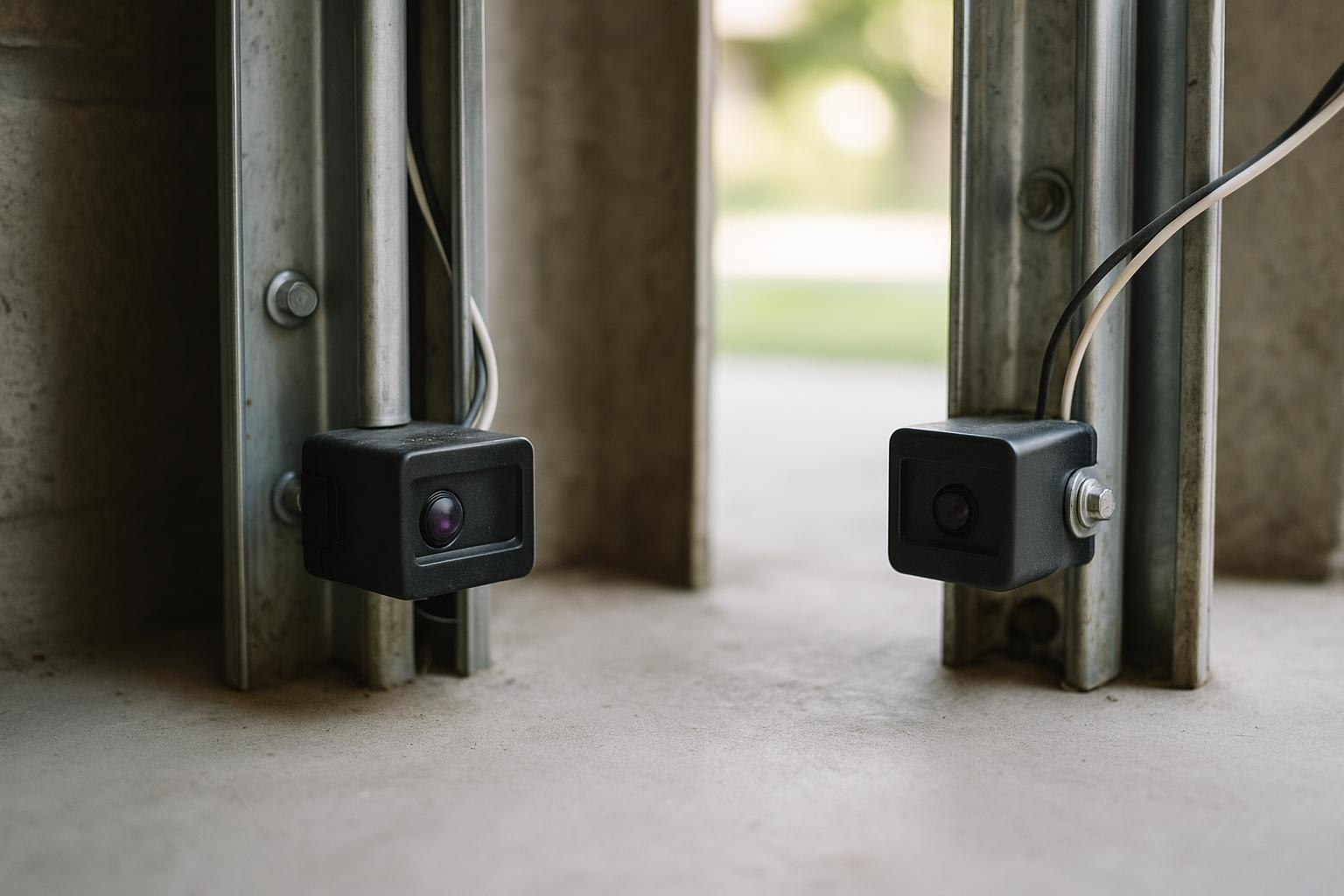
- Photo-eye sensors: Two small sensors mounted near the bottom of your garage door tracks that send an invisible beam across the opening. If something breaks the beam, the door reverses.
- Auto-reverse (pressure sensitivity): If the door encounters physical resistance while closing, it reverses direction to prevent crushing anything underneath it.
Both of these systems are critical for safety. But when they malfunction or get knocked out of alignment, they can cause your door to reverse even when nothing is actually in the way.
Cause #1: Misaligned Photo-Eye Sensors
This is the number one reason garage doors reverse prematurely, and it's especially common in Tehachapi where dust, wind, and temperature swings can shift things around over time. Your photo-eye sensors are mounted on either side of the garage door opening, usually about six inches off the ground. They need to be precisely aligned so the infrared beam connects between them.
Here's what to check:
- Look at both sensors. Most have a small LED light — typically one green and one amber. If either light is blinking or off, the sensors aren't communicating properly.
- Check for dirt, cobwebs, or dust on the sensor lenses. A quick wipe with a soft cloth solves this surprisingly often.
- Make sure nothing is blocking the beam path — a trash can, garden tool, or even a leaf pile can trigger the reversal.
- Gently adjust the sensors so they point directly at each other. Sometimes a bump from a bike tire or a lawnmower is all it takes to knock one out of alignment.
Cause #2: The Close-Limit Switch Needs Adjusting
Your garage door opener has limit switches that tell it how far the door should travel in both directions. If the close-limit switch is set incorrectly, the opener may think the door has hit an obstruction when it's actually just reaching the floor. The opener interprets this as resistance and reverses the door as a safety precaution.
Adjusting limit switches varies by opener brand and model. On many units, you'll find small adjustment screws or dials on the back or side of the motor housing. Your owner's manual will have specific instructions. If you're not comfortable making this adjustment yourself, this is a quick fix for a professional technician.
Cause #3: Worn or Damaged Tracks
Your garage door rides along metal tracks on both sides of the opening. If those tracks are bent, dented, or have accumulated debris, the door can bind or meet resistance on its way down. When the opener senses that resistance, it does exactly what it's supposed to do — it reverses.
Visually inspect your tracks from top to bottom. Look for:
- Visible bends or dents in the metal
- Gaps between the track and the wall-mounted brackets
- Buildup of dirt, grease, or small objects inside the track channel
Minor debris can be cleaned out carefully. But bent or damaged tracks should be repaired or replaced by a professional to ensure the door operates safely.
Cause #4: Broken or Worn Springs and Cables
Your garage door springs do the heavy lifting — literally. They counterbalance the weight of the door so the opener doesn't have to work as hard. When a spring is weakening or a cable is fraying, the door becomes heavier than the opener expects. This extra weight registers as resistance, triggering the auto-reverse function.
Important safety note: Garage door springs are under extreme tension and can cause serious injury if handled improperly. If you suspect a spring or cable issue, please don't attempt a DIY repair. This is one job that should always be left to trained professionals.
Cause #5: The Opener Itself Is Failing
Garage door openers don't last forever. Most have a lifespan of 10 to 15 years, and as they age, the internal logic board, motor, or gear assembly can start to malfunction. If you've ruled out the other causes on this list and your opener is getting up there in years, the unit itself may be the problem.
Signs your opener may be failing include:
- Intermittent reversing that happens inconsistently
- Grinding or humming noises from the motor
- The opener works sometimes but not others, with no apparent pattern
- The remote and wall button both produce erratic behavior
Modern openers are quieter, more energy-efficient, and come with features like smartphone connectivity and battery backup. If yours is due for replacement, upgrading can actually be a worthwhile investment.
When to Call a Professional
Some of these issues — cleaning sensors, removing debris from tracks — are perfectly reasonable DIY tasks. But others, like spring replacement, track repair, limit switch calibration, and opener diagnostics, involve safety risks and technical knowledge that make professional service the smarter choice.
At Tehachapi Garage Door Co, we troubleshoot reversing issues regularly for homeowners throughout Tehachapi, Bear Valley Springs, Golden Hills, and the surrounding communities. We show up on time, diagnose the real problem, and give you honest recommendations — no upselling, no pressure.
Don't Leave Your Garage Open to Trouble
A garage door that won't close isn't just an inconvenience. It's a security vulnerability, an invitation to pests, and an energy efficiency problem — your garage is one of the biggest openings in your home, and leaving it exposed affects your heating and cooling costs more than most people realize.
If your garage door keeps reversing and you can't pinpoint the cause, give us a call. We'll get it sorted out quickly so you can get back to the more important things in your day. That's what neighbors are for.