
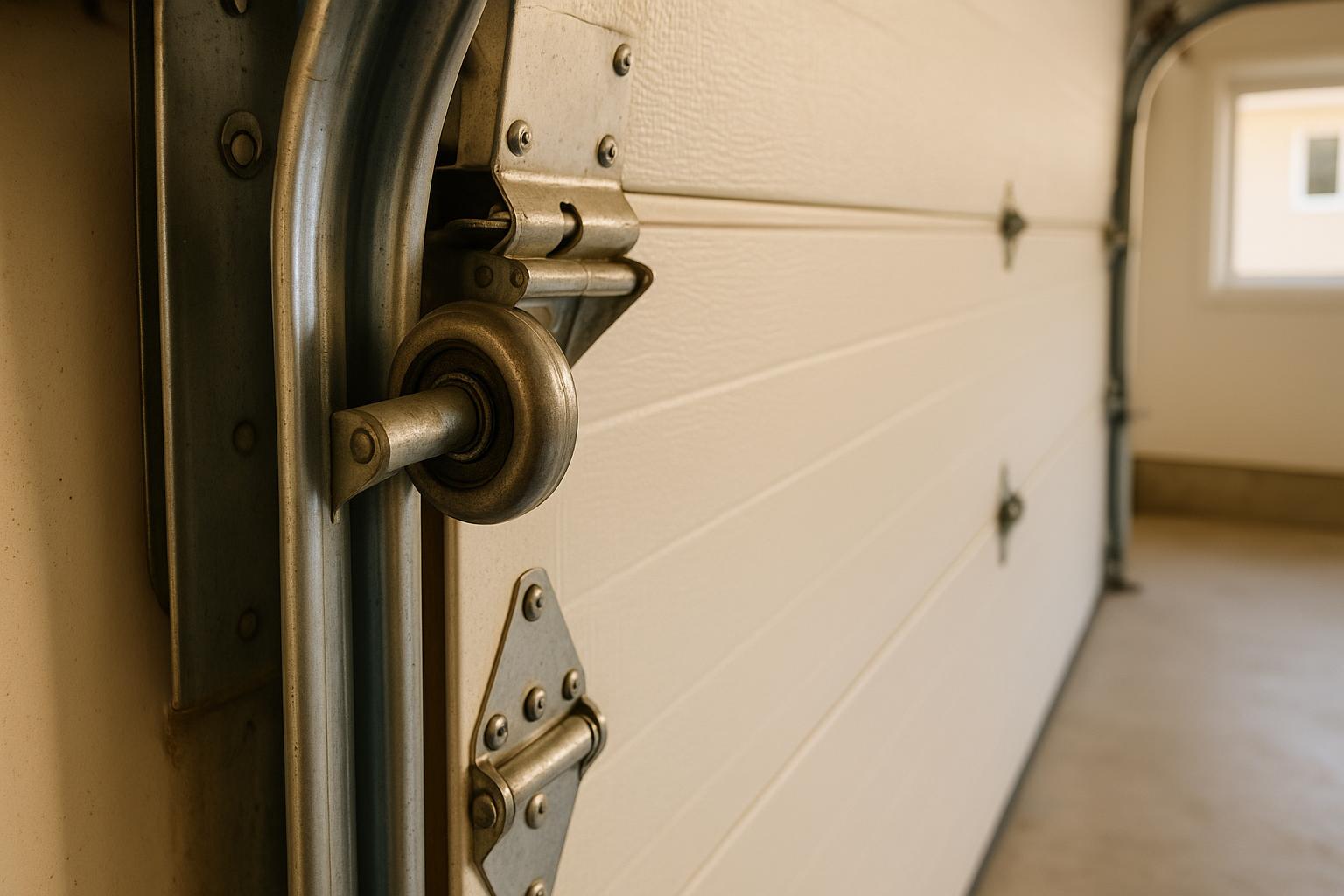
Your Garage Door Shouldn't Sound Like That
You press the button, and instead of a smooth, quiet operation, your garage door groans, squeals, or rattles its way up the track. If you've been ignoring strange noises coming from your garage door, you're not alone — but you shouldn't keep ignoring them. Those sounds are almost always a warning sign that something needs attention.
Here in Tehachapi, our garage doors work hard. Between the elevation changes, temperature swings, and daily use, the mechanical components of your door take a beating. Understanding what different noises mean can help you catch small problems before they become expensive repairs — or a full door replacement.
Grinding or Scraping Sounds
A grinding or scraping noise is one of the most common complaints we hear from homeowners. This sound usually points to one of a few issues:
- Worn rollers: Metal rollers wear down over time, and when they do, they grind against the track instead of rolling smoothly. Nylon rollers are quieter and last longer, and swapping them out is a relatively straightforward fix.
- Misaligned tracks: If the vertical or horizontal tracks have shifted even slightly, the door can scrape against the metal as it moves. This gets worse over time and can eventually cause the door to jam or come off the track entirely.
- Lack of lubrication: Dry metal parts create friction, and friction creates noise. Hinges, rollers, and bearings all need periodic lubrication to function properly.
If you hear grinding, take a look at the rollers and tracks. Visible wear, metal shavings, or a door that doesn't travel straight are all signs you need a professional to take a closer look.
Squealing or Screeching
A high-pitched squeal is hard to ignore — and that's a good thing, because it usually means something is under stress. Common causes include:
- Dry or rusted torsion springs: The springs above your door bear an enormous amount of tension. When they're not properly lubricated, they can produce a loud squealing sound during operation. This is especially common during Tehachapi's drier months when dust and low humidity accelerate rust.
- Worn-out bearings: The bearings in your spring system and rollers can wear out and start screeching. Replacing bearings is inexpensive compared to the damage they can cause if they seize up completely.
- Belt or chain issues on the opener: If the noise seems to come from the ceiling-mounted opener unit, the drive mechanism — whether it's a chain, belt, or screw drive — may need adjustment or replacement.
A quick application of garage door-specific lubricant can sometimes resolve squealing temporarily, but if the noise comes back within a few days, the underlying problem needs professional attention.
Rattling or Vibrating
Rattling is often the easiest noise to diagnose because it usually means something is loose. Over years of daily operation, nuts, bolts, and brackets gradually loosen from the constant vibration of the door cycling up and down.
Here's what to check:
- Hardware on the door itself: Hinges, roller brackets, and the bolts holding panels together can all work loose over time.
- The opener mounting bracket: The bracket that attaches your opener to the ceiling can loosen, causing the entire unit to vibrate and rattle.
- The chain or rail: A loose chain on a chain-drive opener will slap and rattle during operation. It may need to be tightened or the rail may need to be re-secured.
You can carefully tighten some of these components yourself with a socket wrench, but be cautious around anything connected to the spring system or cables. Those parts are under extreme tension and should only be handled by a trained technician.
Loud Banging or Popping
A sudden bang or pop is the noise that gets people's attention fast — and rightfully so. This sound can indicate:
- A broken spring: When a torsion or extension spring snaps, it makes a loud bang that many homeowners mistake for something falling in the garage or even a gunshot. If you hear this sound and your door won't open, a broken spring is the most likely culprit.
- Panel damage: A popping sound during operation can mean a panel is warping or cracking under stress, especially on older wooden doors that have been exposed to Tehachapi's weather extremes.
- Opener gear failure: The internal gears in your garage door opener can strip or break, producing a loud pop followed by the motor running without the door moving.
If your garage door makes a sudden loud noise and stops working, don't try to force it open or closed. Call a professional to assess the situation safely.
Humming or Buzzing Without Movement
If you press your remote and hear the opener hum or buzz but the door doesn't move, the motor is engaging but the door isn't responding. This can happen because:
- The door is locked or obstructed: Check the manual lock on the door and make sure nothing is blocking the tracks.
- The opener has disconnected from the door: If someone pulled the emergency release cord, the opener carriage may not be re-engaged with the door.
- The motor capacitor is failing: Opener motors use a capacitor to start. When it weakens, the motor hums but can't generate enough power to move the door.
- A broken spring is putting all the weight on the opener: Your opener isn't designed to lift the full weight of the door alone. If a spring breaks, the opener motor will strain and buzz without being able to move the door.
When to DIY and When to Call a Pro
Some garage door noises have simple fixes that a handy homeowner can handle. Tightening loose bolts, applying a silicone-based garage door lubricant to rollers and hinges, or re-engaging the emergency release are all safe, basic tasks.
However, anything involving springs, cables, or the bottom brackets of the door should be left to a professional. These components are under extreme tension, and attempting a DIY repair can result in serious injury. If you're unsure about the source of the noise, it's always better to have a trained technician diagnose the problem.
Keep Your Garage Door Running Quietly in Tehachapi
Strange noises don't go away on their own — they get worse. What starts as a minor annoyance can quickly turn into a broken spring, a jammed door, or a burned-out opener motor. Addressing unusual sounds early almost always saves money in the long run.
At Tehachapi Garage Door Co, we help homeowners and businesses across Tehachapi, Bear Valley Springs, Stallion Springs, Golden Hills, and the surrounding areas keep their garage doors running smoothly and quietly. Whether your door is grinding, squealing, rattling, or has gone completely silent when it shouldn't have, our team can diagnose the issue and get it fixed — usually the same day.
If your garage door is making a noise that doesn't sound right, give us a call. We'll figure out what's going on and give you an honest recommendation on the best way to fix it.