
Your Garage Door Springs Are Doing More Work Than You Think
Most homeowners in Tehachapi don't think much about their garage door springs — until something goes wrong. But those tightly wound coils mounted above your door are doing the heavy lifting every single time you open and close your garage. A standard two-car garage door can weigh anywhere from 150 to 300 pounds, and the springs are responsible for counterbalancing all of that weight so your opener (and your arms, if you're operating it manually) don't have to do it alone.
Springs are under enormous tension, and like any mechanical component, they have a limited lifespan. Most torsion springs are rated for about 10,000 cycles — one cycle being a single open-and-close. If you use your garage door four times a day, that's roughly seven years of life. After that, you're on borrowed time.
Knowing the warning signs of failing springs can help you schedule a replacement before you're stuck with a door that won't open on a cold Tehachapi morning — or worse, a spring that snaps violently while someone is standing nearby.
Warning Sign #1: Your Door Feels Heavier Than Usual
One of the earliest signs that your springs are losing tension is a door that feels noticeably heavier when you try to lift it manually. To test this safely, pull the emergency release cord (the red handle hanging from the opener track) while the door is closed. Then try lifting the door by hand about halfway.
A properly balanced door with healthy springs should stay in place when you let go at the halfway point. If it immediately starts sliding back down, or if it takes significant effort to lift, your springs are likely weakening. This is a clear signal that replacement should be on your radar.
Warning Sign #2: The Door Opens Unevenly or Crooked
If your garage door tilts to one side as it opens or closes, one of your extension springs (if your system uses a pair) may be more worn than the other. On doors with two torsion springs, uneven wear can also cause the door to track crookedly.
An uneven door isn't just annoying — it puts extra stress on the tracks, rollers, and opener, which can lead to more expensive repairs down the road. If you notice your door looking lopsided, it's worth having a professional take a look before the problem cascades.
Warning Sign #3: You Hear a Loud Bang From the Garage
If you've ever heard a sudden, loud bang coming from your garage — almost like a gunshot or a car backfiring — there's a good chance a spring just broke. When a torsion spring snaps, it releases all of its stored energy at once, and the sound is unmistakable.
After a spring breaks, your garage door will likely be too heavy for the opener to lift on its own. You might hear the motor straining, or the door might rise a few inches and then stop. Do not attempt to force the door open. Operating a garage door with a broken spring puts dangerous stress on the opener and cables and creates a real risk of injury.
If this happens, call a professional for repair. Here in Tehachapi, we see a spike in broken springs during late fall and winter because cold temperatures cause the metal to contract and become more brittle, making already-worn springs more likely to fail.
Warning Sign #4: Visible Gaps in the Spring Coils
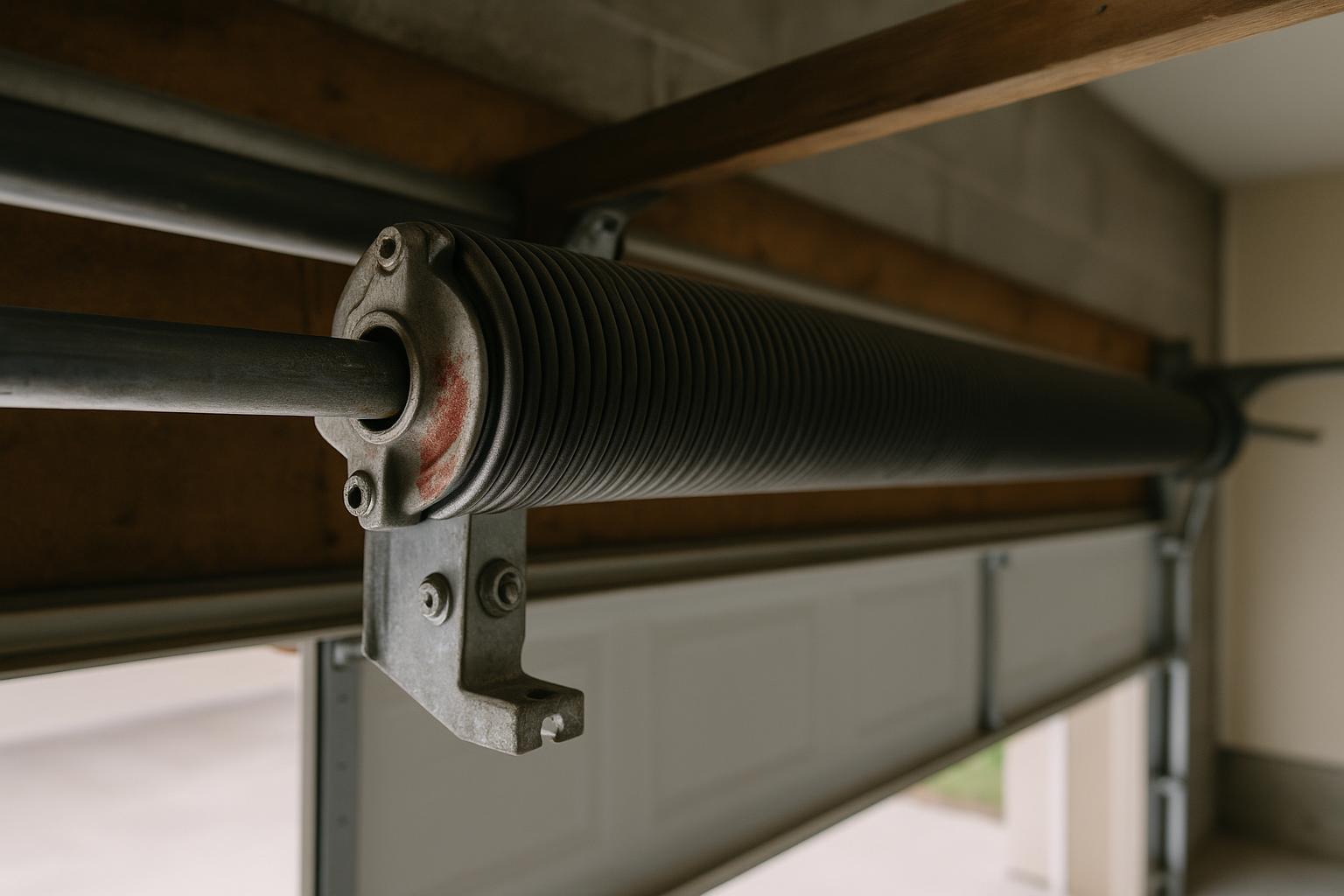
Take a moment to visually inspect your torsion spring — it's the long, tightly coiled spring mounted on a metal shaft directly above the inside of your garage door. When a torsion spring breaks, you'll usually see a visible gap where the coils have separated. Even if the spring hasn't fully snapped, stretched-out or unevenly spaced coils are a sign that the spring is nearing the end of its life.
For extension springs (mounted along the horizontal tracks on either side of the door), look for elongation or deformation. Healthy extension springs should look uniform and taut when the door is closed.
Warning Sign #5: Your Opener Is Struggling
Your garage door opener is designed to work with your springs, not instead of them. When springs lose their counterbalancing ability, the opener has to work much harder to lift the door. You might notice the motor running louder, the door opening more slowly, or the opener stopping partway through the cycle.
If your opener is relatively new but seems to be struggling, don't assume the opener is the problem. Worn springs are a far more common culprit, and replacing them is usually less expensive than replacing an entire opener unit.
Can You Replace Garage Door Springs Yourself?
This is one of the most common questions we get, and the honest answer is: we strongly recommend against it. Garage door springs — especially torsion springs — are under extreme tension. Improper handling can result in serious injury or even death. Every year, emergency rooms across the country treat people who attempted DIY spring replacement and lost control of the spring or the winding bars.
Professional technicians have the proper tools, training, and experience to replace springs safely and efficiently. A typical spring replacement appointment takes less than an hour, and the cost is modest compared to the risk of a DIY attempt gone wrong.
How Often Should Springs Be Replaced?
There's no single answer that fits every household, because it depends on how frequently you use your garage door. Here are some general guidelines:
- Standard torsion springs: Rated for approximately 10,000 cycles (roughly 7-9 years for average use).
- High-cycle torsion springs: Available in 25,000 or even 50,000-cycle ratings for households that use the garage door heavily. These cost more upfront but last significantly longer.
- Extension springs: Generally have a shorter lifespan than torsion springs and should be inspected annually.
If your springs are approaching the end of their expected lifespan, proactive replacement is almost always cheaper and less disruptive than waiting for them to break. A broken spring usually means an emergency service call, and it always means your garage is out of commission until the repair is done.
Why Tehachapi's Climate Matters
Tehachapi's elevation means we experience wider temperature swings than many parts of Southern California. Metal expands in heat and contracts in cold, and garage door springs go through this cycle daily during our transitional seasons. Over time, this thermal cycling accelerates metal fatigue, which is one reason springs in our area may wear out slightly faster than in milder climates.
Regular maintenance — including lubrication with a silicone-based spray — can help offset some of this wear and extend the life of your springs. We recommend lubricating your springs, hinges, and rollers at least twice a year, ideally before summer and before winter.
Don't Wait for the Bang
If you've noticed any of the warning signs above — a heavy door, uneven movement, a struggling opener, or visible wear on the springs — it's time to have them inspected. At Tehachapi Garage Door Co, we help homeowners throughout Tehachapi, Bear Valley Springs, Stallion Springs, and the surrounding communities keep their garage doors safe and reliable year-round.
A quick spring inspection can save you from an unexpected breakdown, protect your family from a safety hazard, and extend the life of your entire garage door system. Give us a call or schedule a visit — we'll take an honest look and let you know exactly where things stand.