
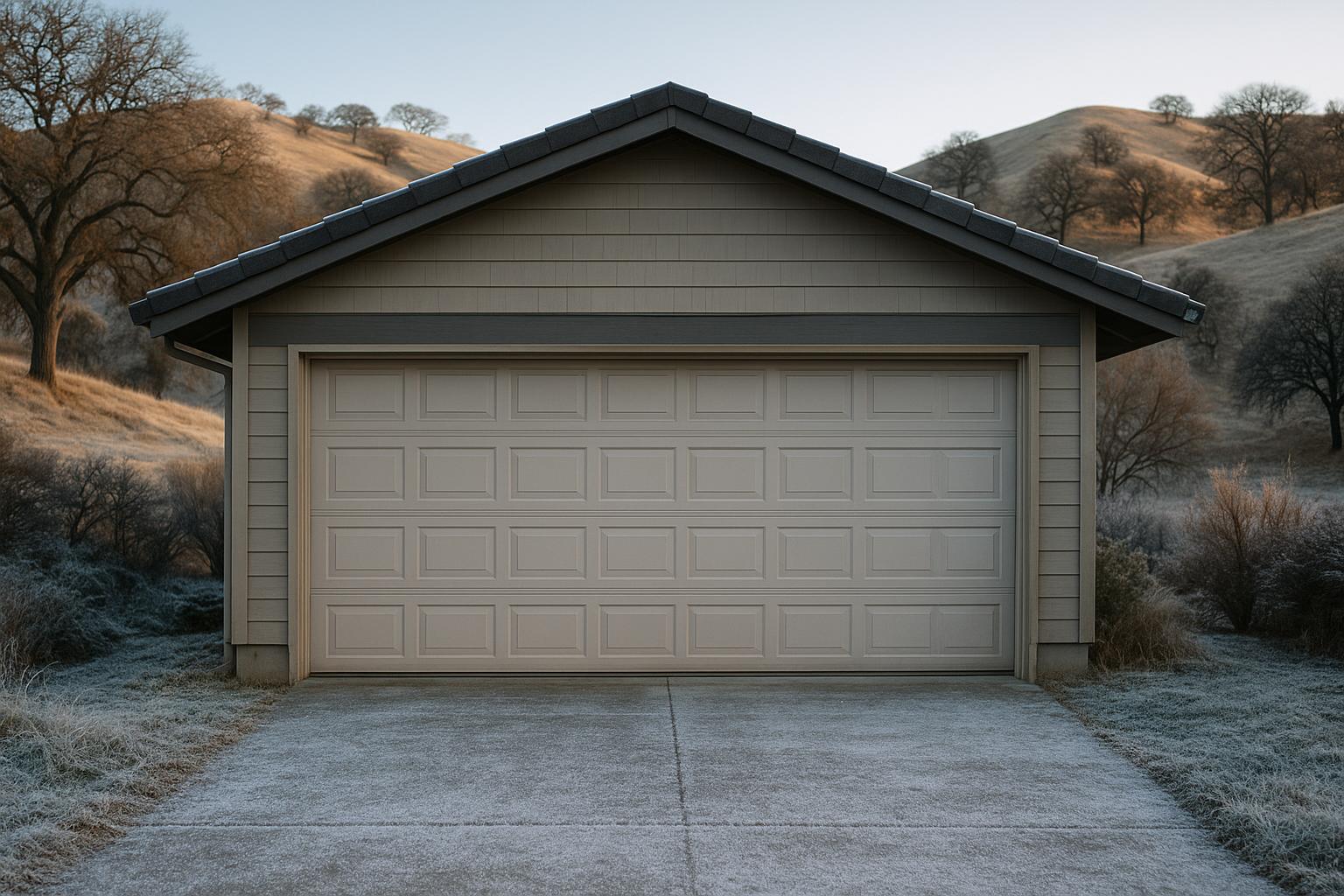
Winter Takes a Toll on Garage Doors in Tehachapi
If you've lived in Tehachapi for even one winter, you know the temperatures can drop fast. Overnight lows in the 20s and 30s are common from November through March, and up in Bear Valley Springs and Stallion Springs, it can get even colder. While most of us are focused on keeping our homes warm, our garage doors are quietly taking a beating from the cold.
Cold weather affects nearly every component of your garage door system — from the metal springs and tracks to the rubber seals and the opener itself. Understanding how winter impacts your door can help you prevent breakdowns, avoid costly emergency repairs, and keep your garage functional when you need it most.
Garage Door Springs Get Brittle in the Cold
Your garage door springs are under enormous tension every single day. They're responsible for counterbalancing the full weight of the door, which can be anywhere from 100 to over 300 pounds depending on the material and size. In cold weather, the metal in torsion and extension springs contracts and becomes less flexible.
This means two things:
- Springs are more likely to snap. A spring that's been slowly wearing out may survive through summer and fall but finally give way during a cold snap. We see a noticeable increase in spring replacement calls during Tehachapi's winter months.
- The door may feel heavier. Cold springs don't stretch and compress as efficiently, so your opener has to work harder. You might notice the door moving more slowly or the opener straining more than usual.
If your springs are more than seven to ten years old and you haven't had them inspected recently, it's worth scheduling a maintenance check before the coldest part of winter arrives.
Metal Tracks and Hardware Contract
Every metal component in your garage door system — the tracks, hinges, rollers, and brackets — contracts slightly when temperatures drop. In most cases, this contraction is minor and doesn't cause problems. But if your tracks were already slightly misaligned or your hardware was loose, the cold can make existing issues worse.
Signs that cold weather is affecting your tracks and hardware include:
- Grinding or scraping noises when the door moves
- The door hesitating or getting stuck partway through its travel
- Visible gaps between the rollers and the track
- The door sitting unevenly when closed
A quick visual inspection can help you catch these problems early. Look at the tracks on both sides of the door and make sure the rollers are seated properly. If anything looks off, it's better to call a professional than to try bending tracks back into place yourself.
Weatherstripping and Seals Harden and Crack
The rubber weatherstripping along the bottom of your garage door and the seals around the frame are designed to keep out cold air, moisture, and pests. But rubber doesn't love the cold any more than metal does. Over time, repeated freezing and thawing cycles cause weatherstripping to harden, crack, and lose its flexibility.
When your seals deteriorate, you'll notice:
- Cold drafts coming in under or around the door
- Moisture, leaves, or dust getting into the garage
- Higher heating bills if your garage is attached to your home
- The bottom seal sticking to the garage floor on freezing mornings
Replacing weatherstripping is one of the most affordable garage door maintenance tasks, and it makes a real difference in comfort and energy efficiency. If your garage is attached to your house — as many are in Tehachapi neighborhoods like Golden Hills — damaged seals can let cold air seep into your living space and drive up your energy costs.
Garage Door Openers Work Harder in Winter
Your garage door opener is essentially an electric motor, and cold temperatures affect its performance. The lubricant inside the motor thickens in the cold, making it harder for the motor to start and run smoothly. If your opener is already aging or underpowered for your door, winter can push it past its limits.
Common cold-weather opener issues include:
- The opener running but failing to lift the door
- Slower-than-normal operation
- The motor humming or buzzing without moving the door
- The opener's safety features tripping more frequently
If your opener is struggling, don't just keep hitting the button and hoping for the best. Repeated strain on the motor can burn it out entirely. Sometimes the fix is as simple as lubricating the moving parts with a cold-rated garage door lubricant. Other times, the opener may need professional attention or replacement.
Frozen Garage Doors: When the Door Won't Budge
On the coldest Tehachapi mornings, you might walk out to find your garage door literally frozen to the ground. This happens when moisture along the bottom seal freezes overnight, bonding the rubber to the concrete floor.
Here's what to do — and what not to do:
- Don't force it. Hitting the opener button repeatedly when the door is frozen shut can strip gears, burn out the motor, or tear the bottom seal right off the door.
- Try gentle heat. A hair dryer or heat gun on a low setting can melt the ice along the bottom seal. Work your way across the full width of the door.
- Use a flat tool carefully. A plastic putty knife or flat shovel can help break the ice bond without damaging the seal. Avoid metal tools that could tear the rubber.
- Prevent it from happening again. Apply a thin layer of silicone-based lubricant to the bottom seal before freezing nights. This helps prevent moisture from bonding the seal to the floor.
Simple Winter Maintenance Tips
You don't need to be a garage door expert to keep your door running well through winter. Here are a few things any homeowner in Tehachapi can do:
- Lubricate moving parts. Use a silicone-based or lithium-based garage door lubricant on the springs, hinges, rollers, and tracks. Avoid WD-40, which is a solvent and not a long-term lubricant.
- Inspect the weatherstripping. Look for cracks, gaps, or sections that have pulled away from the door. Replace any damaged sections before the cold sets in.
- Test the balance. Disconnect the opener and manually lift the door halfway. If it stays in place, the springs are balanced. If it falls or rises, the springs need adjustment — and that's a job for a professional.
- Clear the tracks. Wipe down the inside of the tracks with a clean cloth to remove dirt and debris. Don't lubricate the tracks themselves, as this can cause the rollers to slide instead of rolling properly.
- Listen for changes. If your door starts making new noises — grinding, popping, squealing — don't ignore them. Unusual sounds in winter often indicate a component that's struggling with the cold.
When to Call a Professional
Some winter garage door problems are easy DIY fixes. Others are not. If you're dealing with a broken spring, a door that's come off its tracks, an opener that's stopped working, or any situation where the door feels unsafe, it's time to call in a professional.
At Tehachapi Garage Door Co, we handle everything from routine winter maintenance to emergency repairs throughout Tehachapi, Bear Valley Springs, Stallion Springs, Golden Hills, Keene, and Mojave. We know the local climate, we understand the wear and tear it puts on garage doors, and we show up prepared to fix the problem right the first time.
If your garage door is giving you trouble this winter — or if you just want to get ahead of potential problems — give us a call. A little preventive maintenance now can save you from a frozen, broken, or stuck garage door on the coldest morning of the year.