
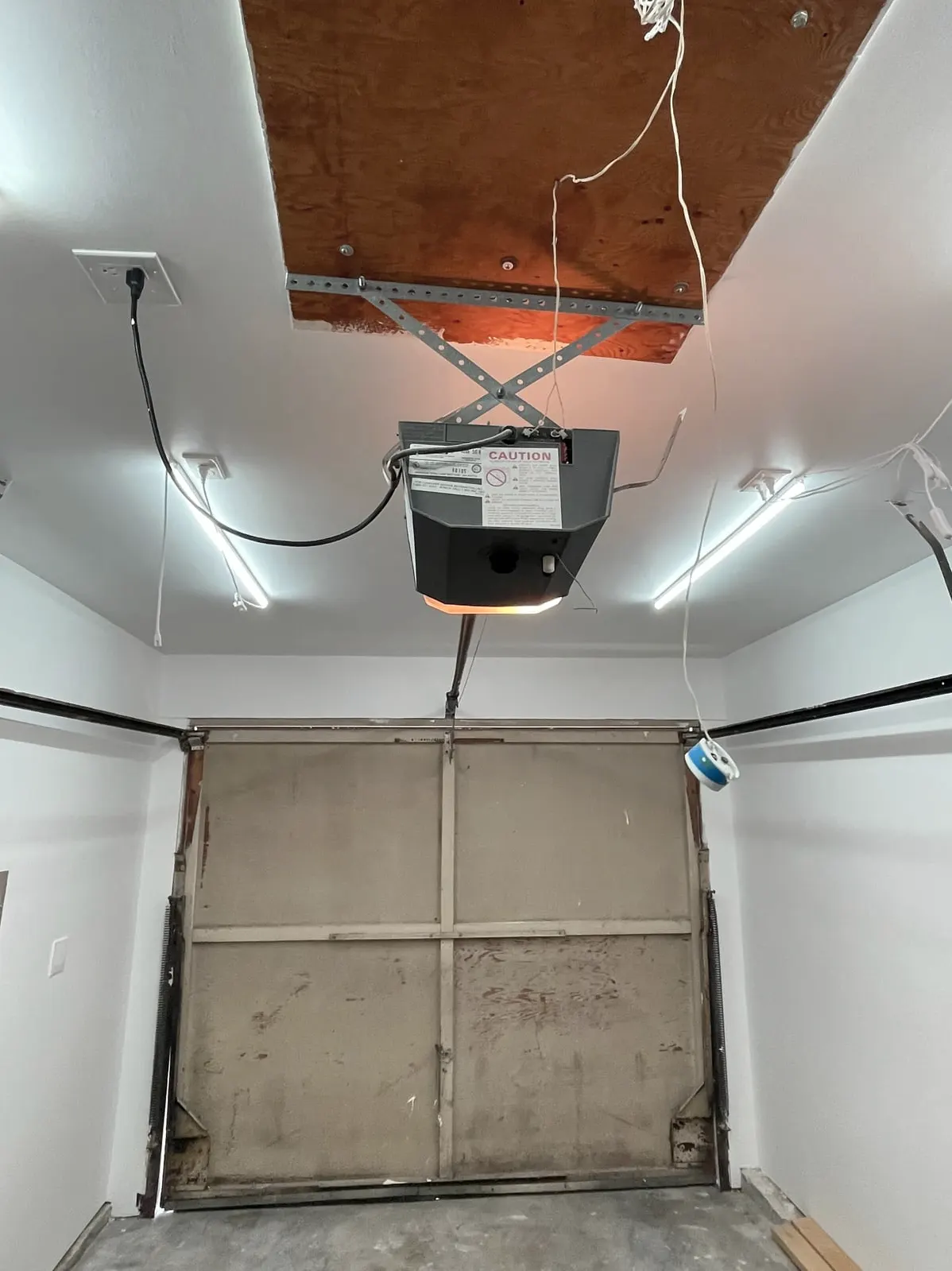
When a garage door opener suddenly stops responding, the first move almost everyone makes is to pop fresh batteries into the remote. If that doesn't work, the next step is usually assuming the whole unit has died and pricing out a replacement online. It's an understandable jump — batteries are cheap and take five minutes, and giving up on the opener feels like you've exhausted the easy options. The trouble is you've skipped the wall button, the breaker, the safety sensors, and a few other common failure points that cost nothing or far less than a new motor to check.
What You're Actually Seeing
How the opener fails tells you a lot before you even open the housing:
- Remote does nothing, wall button works fine — points toward the remote, the antenna, or interference.
- Wall button does nothing, remote works fine — points toward the wiring or the wall station itself.
- Neither does anything, but the opener's light is on — often a lock-out switch, safety sensor issue, or control board problem.
- Neither does anything, no light, no sound at all — almost always a power problem.
- Works up close but not from the driveway — usually antenna or interference, not a dead unit.
A technician works through these in a specific order because each check is cheaper and faster than the next. Here's that order.
1. Power to the Unit
Before touching the remote or the button, check whether the opener has power at all. A tripped breaker, an unplugged cord, or a GFCI outlet that's nuisance-tripped from garage dust or humidity will shut the whole thing down silently. Garages that sit unheated through a Tehachapi winter, or that collect dust during the dry months, are more prone to GFCI outlets tripping than people expect. The fix here is simply resetting the breaker or outlet and testing with another device — no tools required.
2. The Wall Button and Its Wiring
If power is fine but the wall button does nothing, check for an accidentally engaged lock-out or vacation switch on the opener itself — easy to bump while storing holiday decorations or yard equipment overhead. Beyond that, the wiring between the button and the unit is thin, low-voltage wire that's easy to pinch, staple through, or have chewed by rodents, which isn't unusual in outbuildings around Bear Valley Springs and Stallion Springs. A technician checks continuity with a multimeter and either reroutes the wire or replaces the station if it's failed internally.
3. The Remote Itself
Only after power and the wall button check out does attention turn to the remote — the opposite order most homeowners use. Beyond dead batteries, a remote can lose its programming after a power outage, especially with older rolling-code openers. It can also simply wear out internally after years of use. The fix is reprogramming it using the learn button on the motor unit, or replacing the remote if it no longer holds a signal.
4. Safety Sensors (Photo Eyes)
This is the most common cause overall, and it affects the wall button just as much as the remote on most modern openers — if the sensors are blocked or misaligned, many units will refuse to respond to any command rather than risk closing on an obstruction. Dust and wildfire smoke that settle during the dry season can coat the sensor lenses enough to weaken the signal, and a bumped bike or stored ladder can knock the alignment off entirely. The fix is wiping the lenses with a soft cloth and realigning them using the indicator lights until both glow solid.
5. Antenna and Interference
If the sensors are clean and aligned but the remote still fails at range, the antenna inside the motor housing may be bent, knocked loose, or tucked up against metal shelving that blocks the signal. Newer solar inverters or security camera systems — increasingly common additions on properties out toward Mojave, California City, and Rosamond — can also introduce interference. The fix is repositioning or extending the antenna and relocating equipment that's sitting too close to the receiver.
6. Logic Board or Motor
If every check above comes back clean and the opener still ignores both the remote and the wall button, the problem is usually the logic board or the motor's internal wiring — often from age, a power surge, or a failed capacitor. At this point the choice is between replacing the circuit board, which typically runs in the $150–$300 range nationally for parts and labor, or replacing the opener outright if the unit is already a decade or more old, since full opener installation often lands in a similar cost range once labor is factored in.
When to Call Tehachapi Garage Door Co
If you've reset the breaker, checked the wall button wiring, and wiped off the sensors and the opener still won't respond to anything, it's time to call. Our technicians carry signal testers and replacement logic boards for most major opener brands, so we can diagnose whether it's a board, a motor, or a wiring issue on the spot. If your opener is old enough that a board swap doesn't make sense, we'll walk you through Opener Repair & Installation options rather than guessing. We also catch sensor and wiring problems early as part of routine Garage Door Maintenance, before they turn into a door that won't respond to anything at all.
If your opener in Tehachapi, CA is ignoring the remote or the wall button, give Tehachapi Garage Door Co a call — we'll find the actual cause before you spend money on the wrong fix.